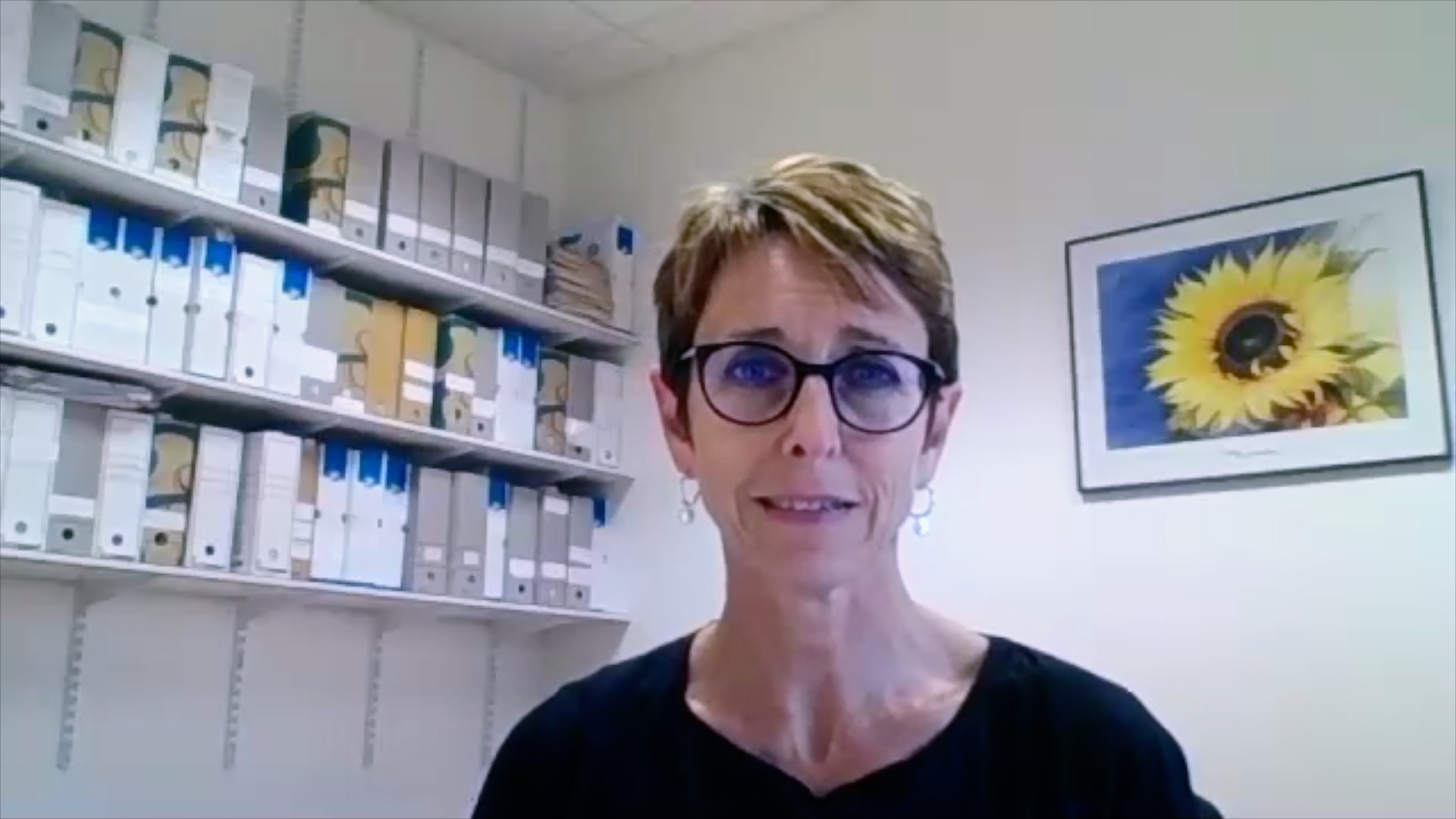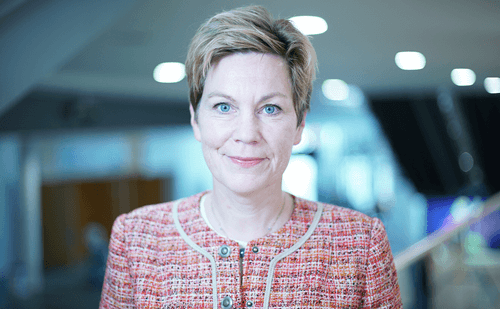
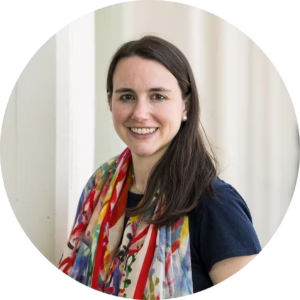
Dr Celia Díez de los Ríos de la Serna is an Oncology Advanced Nurse Practitioner specializing in supportive oncology nursing and hereditary cancer. She has recently been named the MASCC 2025 President Training Fellowship recipient. With experience spanning Spain and the UK, she emphasizes the seamless integration of evidence-based science and compassionate patient care.
In this interview, Dr Díez de los Ríos highlights the evolving role of supportive care as cancer therapies become more targeted, the importance of survivorship research and the value of multidisciplinary collaboration. She advocates for patient-centered approaches, equity in care access, and workforce wellbeing, envisioning a future where supportive oncology is recognized as essential alongside disease-focused treatment.
Q1. Many congratulations on being named the MASCC 2025 President Training Fellowship recipient. What does receiving this award mean for you personally and professionally?
Receiving this Fellowship is both a huge honour and a personal milestone for me. It feels like recognition of my passion as a cancer nurse and of my commitment to keeping patients’ quality of life at the heart of oncology. Professionally, it gives me the chance to work closely with international leaders in supportive care and to contribute to the MASCC 2030 vision. I also see it as a way to bring my research and policy work into practice, especially in how supportive care can be included in national cancer plans. On a personal level, it confirms my belief that nurses and early-career professionals can play an important role in shaping the future of oncology, if we are given the right opportunities and mentorship.
Q2. Is there a particular moment or experience in your career that reinforced your passion for your specialty?
When you start as a young nurse in Spain, you usually go through many specialties and short contracts. I was working in a hematology day unit, seeing patients almost every week, when I realized the deep connection I felt with them and their treatments. There was a real sense of team between patients and healthcare professionals, and the relationship we had with physicians, patients, and families was very special. From then on, I just followed that passion. It took me to the UK, to Southampton General Hospital, where I had the chance to work with amazing professionals and truly multidisciplinary teams, always putting the patient at the centre. I will always be grateful to the times I could just sit in the ward chatting with my patients, they are the ones who have inspired me the most throughout my career.
Q3. How do you balance the scientific aspects of your work with the human and emotional side of supportive oncology?
Maybe it is the empathic part of me but I don’t think the scientific and human sides of supportive care can be separated so the balance is already there. Science gives us the evidence and structure we need, but the human and emotional aspects are what make it meaningful. In my clinical work, I follow or help to develop evidence-based protocols, but I also make sure to listen to patients’ fears, preferences and values. In research I feel we need patient and public involvement and patient-reported outcomes so their voices are part of the research. This same balance is important in teaching too, where I try to show the value of both clinical excellence and compassion. I believe supportive oncology works best when science and empathy go hand in hand.
Q4. How do you see supportive care evolving as cancer therapies become more targeted and complex?
Cancer therapies are changing the oncology landscape; people are living longer, and toxicities are often different: less acute but more chronic. Supportive care will need to evolve in parallel. This requires stronger collaboration across disciplines and earlier involvement of supportive care specialists from diagnosis onward. Nurses, psychosocial experts, and allied health professionals will play increasingly visible roles. Nurses will act as coordinators of care to help patients navigate complex treatment pathways. Digital tools will also improve communication across disciplines making it easier and faster helping to ensure patients’ needs are addressed in real time. Most importantly, the culture in oncology must keep shifting to value supportive care as equal to disease-focused treatment. In the future, success will not be measured by survival alone, but by how well patients live during and after therapy.
Q5. Where do you see the greatest unmet research needs in supportive oncology?
One of the greatest unmet needs is survivorship. More people are living longer with and after cancer, and diagnoses in younger adults are also increasing. We need more research to understand the physical, psychological and social challenges survivors face in the short, medium, and long term. This includes prevention of late effects, managing comorbidities, and supporting return to work and family life but also promoting healthy lifestyles and looking at the life outside of the hospital. Another pressing gap is equity: many supportive care interventions are not equally accessible and often depend on private resources or geography. Implementation research is needed to adapt interventions to different systems, cultures and resource settings. Finally, workforce wellbeing is an overlooked but urgent priority. Burnout among oncology professionals directly impacts the quality of supportive care patients receive. Addressing this is essential for a sustainable progress.
Q6. How do you envision collaborations between oncologists, palliative care specialists, nurses and psychosocial experts evolving in the future?
Collaboration in oncology must move beyond silos toward true multidisciplinary teams, where supportive care professionals are involved from the very beginning of the cancer journey. This means not only oncologists, but also nurses, palliative care specialists, psychosocial experts, rehabilitation teams and others working together as equals. Nurses will have a bigger role in ensuring the patient’s voice is central, while digital platforms will help different professionals communicate and coordinate more effectively. Psychosocial professionals will stop being a luxury to be an integral part of the team. Importantly, the culture of oncology must continue to evolve so supportive care is valued as much as disease-focused treatment. Only then will we truly achieve care that balances survival with quality of life, which should always be the ultimate goal.
About Celia Díez de los Ríos de la Serna
Celia Díez de los Ríos de la Serna is an Oncology Advanced Nurse Practitioner specialised in medical oncology and hereditary cancer. She works in research and clinical practice and also supports the training of cancer nurses in the University Europea and University of Navarra. She did her PhD in cancer prevention and lifestyle behaviours on people living with hereditary cancer syndromes. She is a FT3 board member and also is volunteer in other organisations such as: GPON, EONS and ISONG.
 About the Multinational Association of Supportive Care in Oncology (MASCC)
The Multinational Association of Supportive Care in Cancer (MASCC) is an international, interdisciplinary organization dedicated to the practice, education and research of supportive care in cancer. Their mission is to continually improve the supportive care of people with cancer – from diagnosis through to survival or end-of-life care.
Disclosure: This short article was prepared by touchONCOLOGY in collaboration with the Multinational Association of Supportive Care in Oncology (MASCC). No fees or funding were associated with its publication. Celia Díez de los Ríos de la Serna has no financial or non-financial conflicts of interest to disclose in relation to this article.
Related content
- The future of cancer survivorship care: 3 questions with Dr Darren Haywood
- “Challenges faced by Early Career Cancer Nurses and how EONS supports them in overcoming obstacles” by the EONS Early Career Nurses Working Group
- Personalized cancer care in geriatric oncology: Insights from SIOG President Dr Grant Williams
Cite: Supportive oncology focus: Dr Díez de los Ríos de la Serna on integrating science and empathy. touchONCOLOGY. September 17th, 2025
SIGN UP to touchONCOLOGY!
Join our global community today for access to thousands of peer-reviewed articles, expert insights, and learn-on-the-go education across 150+ specialties, plus concise email updates and newsletters so you never miss out.